

New Construction Homes in Austin: Everything Buyers Need to Know
A new construction home can offer modern layouts, current building systems, energy-efficient features and the opportunity to choose finishes before moving in. Austin-area buyers can find new homes in infill developments, condominium projects, master-planned communities and fast-growing suburbs such as Leander, Pflugerville, Manor, Buda and Kyle.
New does not mean simple or risk-free. Builder contracts, deposits, construction timelines, upgrade pricing, inspections, warranties, taxes and community fees can differ substantially from a traditional resale purchase. Buyers may also face decisions months before the home is complete, while the surrounding neighborhood is still being developed.
This guide explains how the process works, what to investigate and how to compare the total cost of a new home. It is educational rather than legal, mortgage, tax, engineering or inspection advice. Buyers should verify every material detail for the specific property and obtain guidance from qualified professionals.
Choosing the Right New Construction Home
Understand the Main Types of New Construction
Not all new homes are purchased the same way. A completed inventory home is finished or nearly finished and may allow a relatively fast closing. A quick-move-in home is under construction with many design decisions already made. A to-be-built or presale home may allow more customization but usually requires a longer timeline and greater uncertainty.
Buyers may also purchase a custom home on land they already own or acquire a lot and construction package. That structure can involve separate land, construction and permanent financing. A construction loan is generally short-term financing released in stages as work progresses and may carry different terms from a standard purchase mortgage.
Choose the Location Before the Floor Plan
Model homes are designed to create excitement, but the surrounding location often has a greater long-term effect on daily life and resale value. Evaluate the actual lot, street, phase and community rather than judging the development only from the sales center.
Test the commute during realistic travel hours. Review access to employers, schools, healthcare, shopping, parks and transit. Consider road construction, future commercial development and how much additional building will occur before the neighborhood is complete.
Compare Infill Construction and Master-Planned Communities
Infill construction may place a new home within an established Austin neighborhood. It can offer central access and modern design, but the lot may be narrow, the surrounding homes may vary in condition and construction activity may continue nearby. Buyers should verify drainage, setbacks, shared driveways, utility arrangements and the legal structure of any condominium regime.
Master-planned communities may offer pools, trails, schools, parks and coordinated design. They may also have HOA dues, utility-district taxes, transfer fees, design restrictions and years of continuing construction. Buyers should understand both the amenities and the full cost of maintaining them.
Research the Builder
Review the builder's history, completed communities, warranty process and reputation for correcting problems. Visit homes that are several years old, not only the current model. Ask owners how the builder handled final punch-list items and warranty claims.
A national brand, local builder or custom contractor can each produce a good home. The important questions are whether the company has stable operations, qualified trade partners, clear quality-control procedures and a documented process for resolving defects.
Examine the Exact Lot
Lot location can influence privacy, noise, drainage, insurance and resale. Check whether the home backs to a major road, school, commercial site, detention pond, trail, transmission line, future phase or undeveloped land.
Review slope, retaining walls, easements, utility boxes, streetlights, sidewalks and the direction of afternoon sun. Ask what may be built on adjacent parcels. A premium view today may change if the surrounding property is not protected.
Review Flood, Drainage and Wildfire Information
New construction does not eliminate environmental risk. Use official City of Austin tools where applicable to review floodplains, storm-drain infrastructure, permits and property information. For properties outside the city, consult the relevant county, municipality and flood-mapping resources.
In hillside or western communities, buyers should also evaluate wildfire exposure, evacuation routes, landscaping and insurance availability. A property can be outside a mapped floodplain and still experience localized drainage problems, so site-specific inspection remains important.
Verify Schools Rather Than Relying on Marketing
A community may be marketed with references to a nearby school district or planned campus, but assignments and attendance boundaries can change. Verify the exact address directly with the school district before making a decision.
Do not assume that a school shown on a brochure is open, guaranteed or within walking distance. Planned facilities may be delayed, and growth can lead to rezoning or overcrowding.
Contracts, Costs and Builder Incentives
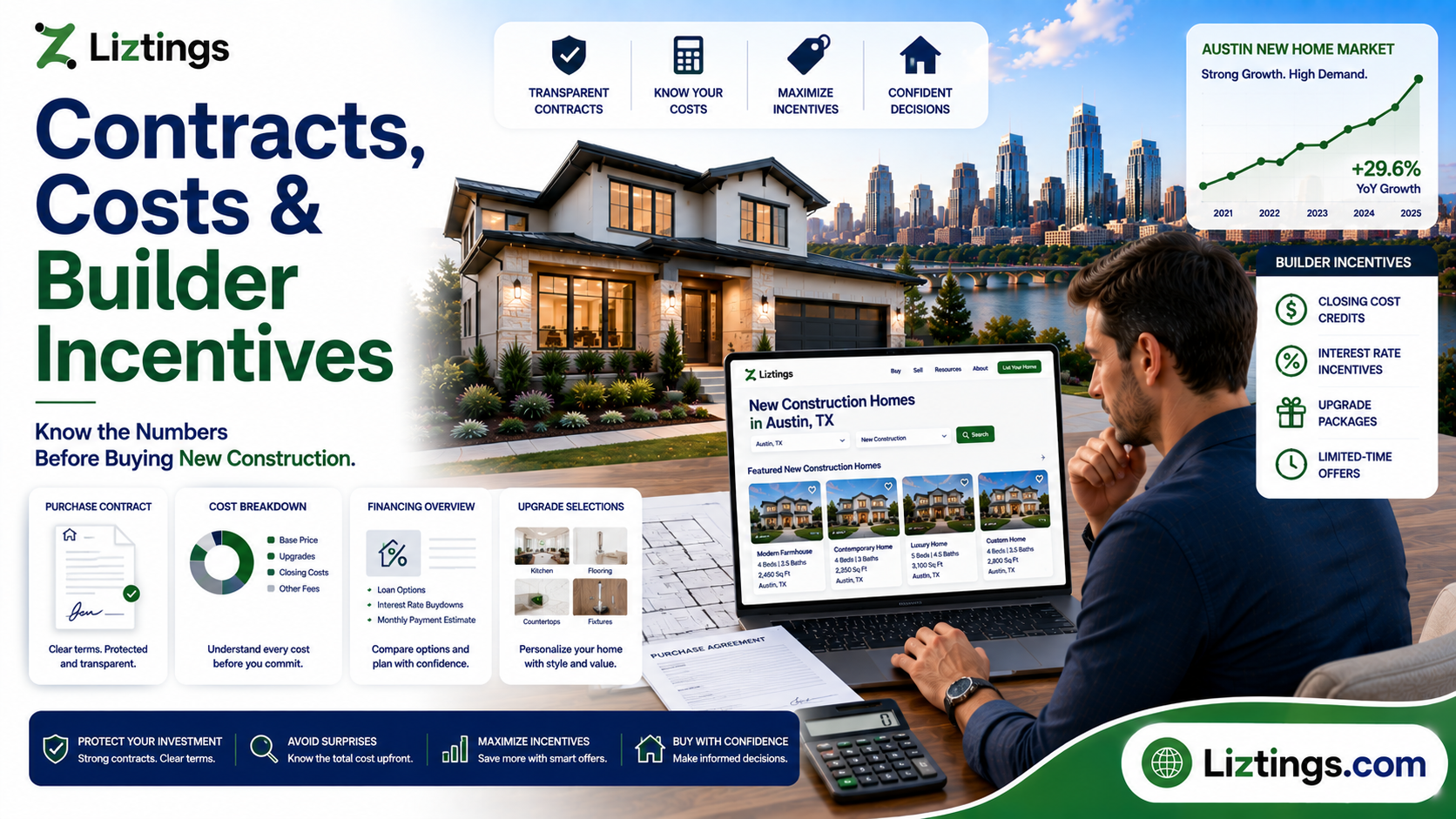
The Builder's Sales Representative Works for the Builder
The person in the sales office may be helpful, but that representative generally works for the builder. Buyers should understand whom each professional represents and consider obtaining independent real estate, legal, inspection and lending advice.
Representation should be arranged before the first visit when required by the builder's registration policies. A buyer should never assume that the builder's paperwork, lender or title arrangement has been selected to protect the buyer's interests.
Read the Contract Before Paying a Deposit
Texas has specific contract forms for new homes, including completed and incomplete construction, but builders may also use proprietary contracts and addenda. The terms can differ from standard resale agreements.
Review deposits, financing deadlines, appraisal terms, construction standards, change orders, completion dates, inspection rights, default remedies, dispute procedures, warranties and closing obligations. Some deposits may become nonrefundable at specified stages. A buyer should know exactly what can be lost if financing, employment or personal circumstances change.
Do Not Treat the Completion Date as Guaranteed
Weather, labor shortages, utility connections, municipal approvals, material availability and design changes can affect the schedule. Contracts may provide broad flexibility to the builder or define completion using contractual language that differs from the buyer's expected move-in date.
Keep housing and moving plans flexible. Avoid giving notice on a lease or scheduling movers solely from an informal estimate. Confirm what happens if construction is delayed and whether the contract offers any buyer remedy.
Understand Base Price Versus Final Price
The advertised base price may exclude the lot premium, elevation, structural options, design-center upgrades, appliances, window coverings, landscaping, fencing, irrigation, garage features and other items shown in the model.
Request a written price sheet showing every included feature and upgrade. The final cost should also account for closing expenses, prepaid taxes and insurance, moving, furniture and post-closing work. A home that begins at $450,000 can cost much more after lot and design selections.
Separate Structural Options From Cosmetic Upgrades
Structural decisions such as room additions, ceiling height, plumbing locations, windows, doors and electrical capacity are often difficult or expensive to change later. Cosmetic selections such as paint, fixtures and some flooring may be easier to replace after closing.
Prioritize options that improve function, durability and resale appeal. Be cautious about spending heavily on highly personal finishes or upgrades that exceed the surrounding neighborhood's typical standard.
Track Every Change Order
Changes after contract can increase cost and delay completion. Require written documentation showing the price, schedule effect and whether the payment is due immediately or at closing.
Confirm whether upgraded amounts will be included in the appraisal and mortgage. Some builders require nonrefundable payments for selections that may not contribute dollar-for-dollar to appraised value.
Evaluate Builder Incentives Carefully
Builders may offer closing-cost assistance, mortgage-rate reductions, design credits, appliance packages or price discounts. Incentives can be valuable, but they should be compared as part of the complete transaction.
A preferred lender may offer a large credit while charging a different rate, points or fees. Ask for an official Loan Estimate and compare it with independent lenders using the same loan type, down payment and rate-lock assumptions. A lower rate may be temporary, and a credit may be funded indirectly through the price or financing structure.
Understand Rate Locks and Extensions
A long construction timeline can create interest-rate risk. Some lenders offer extended locks, float-down options or builder-linked programs. These products may include fees, conditions or expiration dates.
Confirm who pays if completion is delayed beyond the lock period. Do not assume the builder will cover an extension unless the agreement says so in writing.
Budget for Closing Costs and Prepaids
New construction buyers still face lender fees, title-related charges, appraisal costs, prepaid interest, insurance and escrow deposits. Depending on the contract, the buyer may also pay community, association, transfer, utility or inspection-related charges.
Compare the Loan Estimate and later Closing Disclosure carefully. Mortgage costs should be evaluated using both the interest rate and the complete cost of the loan.
Estimate Property Taxes Using the Completed Home
A common budgeting mistake is relying on the tax amount shown while the lot is vacant or the home is only partially complete. The future appraisal may reflect the completed land and improvements, producing a much larger tax bill.
Ask the local appraisal district and lender how the estimate was prepared. Review all taxing jurisdictions, including school, city, county and special districts. Buyers in newer communities should pay close attention to municipal utility districts, public improvement districts or other assessments.
Review Homestead Exemption Timing
A qualifying owner may apply for a residence homestead exemption through the appraisal district. The exemption and appraisal limitation rules have timing and eligibility requirements and should not be assumed in a lender's initial estimate.
The Texas Comptroller explains that exemption applications are filed with the county appraisal district and that the appraisal limitation begins only after the property qualifies. Buyers should use current official guidance for their ownership year.
Include HOA and Community Fees
Obtain the HOA documents, budget, dues, transfer charges and restrictions. Determine which amenities are complete, which are planned and whether dues are expected to increase as the community grows.
Some developments include mandatory service packages, private infrastructure or fees beyond ordinary HOA dues. Ask for a written list of recurring and one-time obligations.
Section 3: Inspections, Construction Quality and Closing
Hire an Independent Inspector
A municipal inspection checks compliance with applicable codes, while an independent home inspection evaluates the property for the buyer. These are different functions. Passing a city inspection does not mean the home is free of defects or completed to the buyer's expectations.
Use an inspector experienced with new construction. Confirm inspection access in the contract and coordinate with the builder's required notice procedures.
Consider Multiple Inspection Stages
For a home under construction, buyers may consider inspections before drywall, near substantial completion and before the builder warranty period ends. A pre-drywall inspection can review visible framing, mechanical systems and other work before it is covered.
A final inspection can identify incomplete work, damaged finishes and functional concerns. A later warranty inspection may detect settling, drainage or system issues that were not visible at closing. The appropriate stages depend on the contract and construction status.
Document the Home's Condition
Keep copies of plans, selections, change orders, inspection reports, photographs, warranties and builder communications. Record concerns in writing rather than relying on verbal promises.
Create a detailed punch list with the location and description of each issue. Confirm which items will be completed before closing and which will remain warranty requests. A vague agreement to fix everything later creates avoidable conflict.
Verify Permits and Final Approvals
For property within Austin, the City's Property Profile and Austin Build + Connect resources can provide permit and inspection information. Confirm that required permits and final approvals have been completed for the residence and included improvements.
A certificate of occupancy or other final approval does not replace independent due diligence. It confirms a regulatory milestone, not the buyer's satisfaction with workmanship, contract compliance or long-term performance.
Review the Warranty Before Closing
A builder warranty may have separate coverage periods for workmanship, systems and structural components. It can include exclusions, claim procedures, deadlines, maintenance requirements and dispute provisions.
Read the actual warranty document rather than relying on a sales summary. Determine who administers the warranty, how claims are submitted, what response time applies and whether disputes require mediation or arbitration. A builder warranty is different from a residential service contract that covers certain mechanical or appliance failures.
Ask About Manufacturer Warranties
Roofing, HVAC equipment, appliances, windows and other products may include separate manufacturer warranties. Confirm that registration, serial numbers and transfer documents will be provided.
Some warranties require the owner to register within a limited period or maintain equipment according to specified schedules. Create a post-closing calendar for these tasks.
Check Utilities and Internet Service
A new development may not have the same utility provider or service choices as an established neighborhood. Verify electricity, water, wastewater, trash, gas and internet at the exact address.
Ask whether the home uses a municipal system, utility district, septic system, propane or private service. Planned internet service or future utility connections should not be treated as guaranteed until confirmed by the provider.
Plan for Settling and Drainage Maintenance
New homes can experience normal movement and material shrinkage, but buyers should not assume that every crack, drainage issue or door problem is harmless. Document changes and report concerns within warranty deadlines.
Follow grading, irrigation, foundation watering and landscaping guidance appropriate to the property. Do not make changes that direct water toward the foundation or neighboring property.
Conduct a Careful Final Walk-Through
Before closing, verify that agreed work is complete, appliances and fixtures are present, systems operate and the home is clean and secure. Test doors, windows, plumbing fixtures, lights, outlets, HVAC controls and included equipment where practical.
Compare the completed home with the contract, plans and selection documents. Photograph unresolved items and confirm the written process for completion. The final walk-through should not be rushed because the buyer is eager to receive the keys.
Protect the Closing From Wire Fraud
Real estate transactions are targets for payment and identity fraud. Verify wiring instructions directly with the title company through a trusted phone number. Treat unexpected changes as suspicious and avoid relying on email alone.
Review the Closing Disclosure and settlement figures in advance. Ask questions before the closing appointment rather than assuming discrepancies can be resolved afterward.
New Construction Versus Resale: Key Trade-Offs
Potential Advantages of New Construction
Modern layouts, electrical capacity and current building systems.
Lower immediate need for major replacement work.
Possible choice of lot, floor plan and finishes.
Builder and manufacturer warranty coverage.
Community amenities and coordinated development.
Potential builder financing or closing incentives.
Potential Disadvantages of New Construction
Uncertain completion dates and continuing neighborhood construction.
Builder-focused contracts and nonrefundable deposits.
Upgrade costs above the advertised base price.
Taxes and community fees that may be underestimated initially.
Smaller lots, immature landscaping or limited established services.
Warranty claims and unfinished punch-list items after closing.
Austin New Construction Buyer Checklist
Before Signing
Research the builder and visit older completed communities.
Evaluate the exact lot, commute, schools and future development.
Review flood, drainage, wildfire and insurance considerations.
Obtain independent representation and legal advice where appropriate.
Read the contract, warranty and HOA documents.
Calculate the final price with lot premiums and upgrades.
Compare lender incentives using official Loan Estimates.
During Construction
Keep every selection and change order in writing.
Track the schedule without treating estimates as guarantees.
Arrange permitted independent inspection stages.
Save photographs, plans, reports and builder communications.
Monitor rate-lock deadlines and financing conditions.
Prepare a realistic tax, insurance and monthly-cost estimate.
Before Closing
Confirm permits and required final approvals.
Complete the independent final inspection.
Document the punch list and completion responsibility.
Review the warranty claim process and manufacturer documents.
Verify utilities, internet, HOA dues and community fees.
Conduct a detailed final walk-through.
Review closing figures and verify payment instructions directly.
Find New Construction Homes Across the Austin Area
A new home can be a strong choice when the location, builder, contract and total cost fit the buyer's goals. The key is to look beyond the model-home presentation and evaluate the exact property with the same care used for any major investment.
Liztings helps buyers discover residential opportunities without paid placement deciding which homes receive visibility. Every listing gets a fair chance to be found.
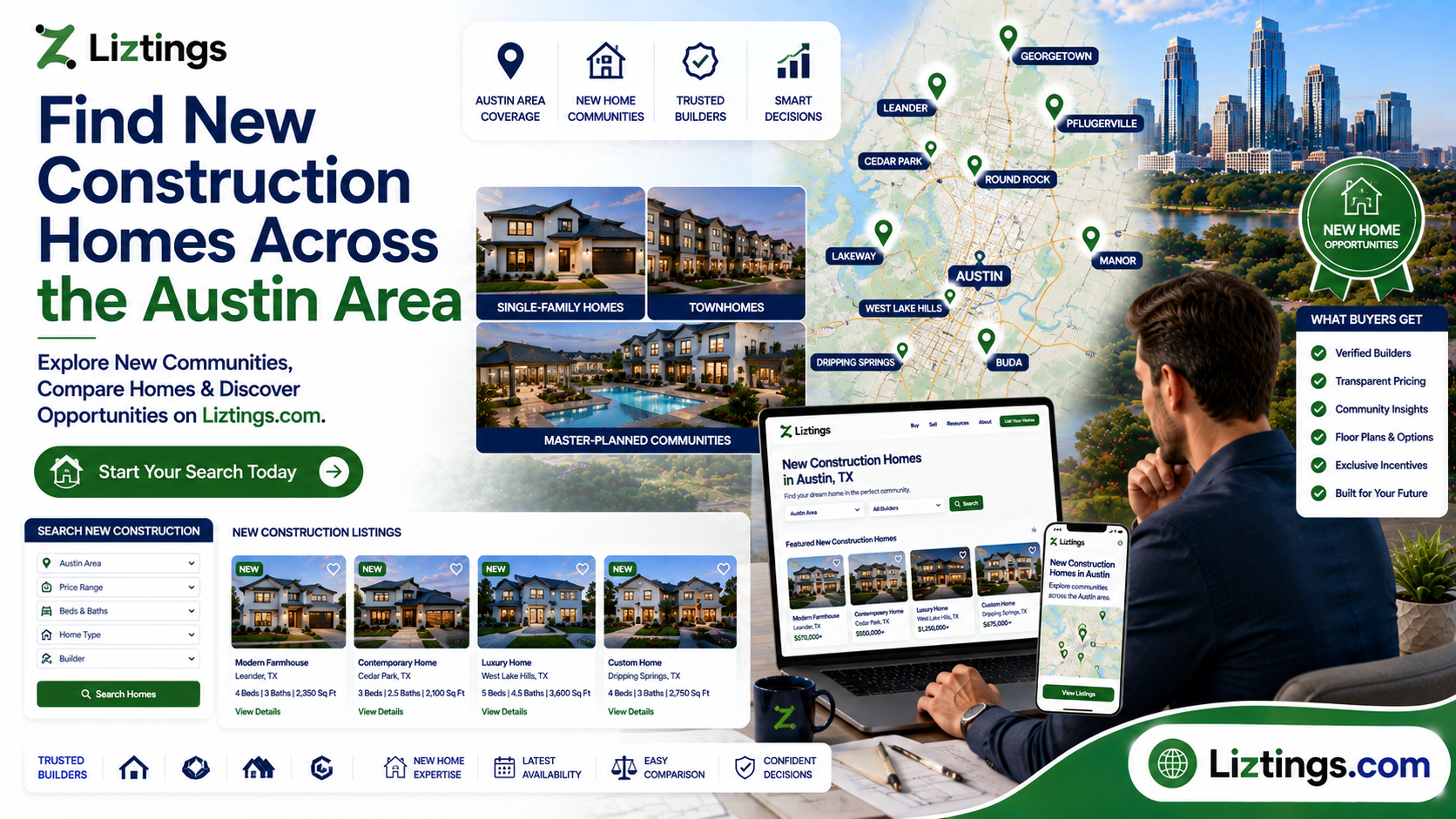
Explore new construction homes and Austin-area residential listings at Liztings.com. Listing is free.